This is a question we hear a lot: “Isn’t dry needling the same thing as acupuncture?” It’s a fair question. Both involve thin needles inserted into the body. Both are used to relieve pain. And from the outside, a session of either one might look pretty similar. But the two practices are actually quite different — in their training, their philosophy, their scope, and what they can do for you. As someone who has practiced acupuncture for over 25 years, I think the distinction matters, and I want to help you understand it so you can make the best choice for your health.
What Is Dry Needling?
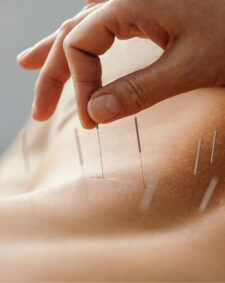
Dry needling is a technique used primarily by physical therapists, chiropractors, and some athletic trainers to treat myofascial pain — essentially, tight knots in muscles called trigger points. A practitioner inserts a thin filament needle directly into the trigger point, which causes the muscle to twitch and then release. The goal is mechanical: loosen the knot, reduce local pain, restore range of motion.
The technique is relatively new. It emerged in the West in the 1980s and is rooted in Western anatomy and musculoskeletal science. Training requirements vary by state, but most dry needling certifications involve between 24 and 54 hours of instruction.
What Is Acupuncture?
Acupuncture is a complete medical system that has been practiced for over 2,000 years. It involves the insertion of fine needles into specific points along the body’s meridian system to restore balance, promote healing, and address a wide range of health conditions — not just pain, but also fertility, digestion, hormonal imbalances, stress, sleep, immunity, and much more.
Licensed acupuncturists in New York complete a minimum of three to four years of graduate-level education, including extensive clinical training, and pass national board examinations. At The Yinova Center, our practitioners hold doctoral or master’s degrees in Chinese medicine and many have been in practice for a decade or more. The depth of training matters because acupuncture isn’t just about where you place a needle — it’s about understanding the whole person and how their symptoms connect.
The Key Differences
Scope of treatment. This is the biggest distinction. Dry needling treats one thing: musculoskeletal pain at specific trigger points. Acupuncture treats the whole person. In a single session, we might address your back pain and your insomnia and your digestive issues, because in Chinese medicine, these are often connected. The needle placements are chosen based on a comprehensive diagnosis, not just the location of your pain.
Diagnostic framework. Dry needling uses a Western anatomical model — find the tight muscle, needle it. Acupuncture uses a diagnostic system that considers your pulse, your tongue, your health history, your emotional state, and how your symptoms relate to one another. Two patients might come in with the same shoulder pain but receive completely different treatments because the underlying pattern is different.
Training and regulation. This is where the gap is widest. A licensed acupuncturist in New York has completed roughly 3,000 hours of education and clinical training, plus board certification. Dry needling certifications typically require a fraction of that — sometimes as little as a weekend course. In some states, dry needling by non-acupuncturists isn’t regulated at all. We believe this distinction matters for patient safety.
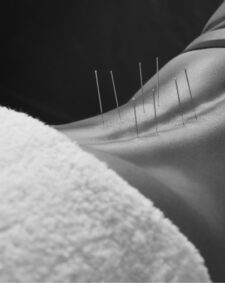
The experience. Dry needling tends to be targeted and brief — a few needles in and out of a tight muscle, sometimes producing a strong twitch response. Acupuncture is typically a more immersive experience. At Yinova, our sessions last 45 to 60 minutes. Patients rest with their needles in a quiet room, and most describe feeling deeply relaxed — some even fall asleep. The nervous system settling is part of the treatment.
Can They Work Together?
In some cases, yes. Patients who are seeing a physical therapist for a specific injury sometimes benefit from dry needling as part of that rehab work, while also receiving acupuncture for broader health support. We coordinate with physical therapists and other providers regularly at Yinova. The key is understanding what each approach does well and using it in the right context.
How to Decide What’s Right for You
If you have a specific muscular knot or trigger point causing pain and you’re already working with a physical therapist, dry needling might be a useful addition to your rehab plan. But if your goals are broader — if you’re dealing with pain alongside stress, sleep issues, hormonal changes, fertility challenges, digestive trouble, or you simply want to support your overall health — acupuncture is the more comprehensive choice. It’s not just about relieving a symptom; it’s about understanding why that symptom is there in the first place.
At The Yinova Center, every treatment begins with a thorough intake and a personalized diagnosis. We don’t just look at where it hurts — we look at the full picture. And that’s the difference that 2,000 years of medical tradition, and over two decades of clinical experience in New York City, can make.
Frequently Asked Questions
Is dry needling the same as acupuncture?
No. While both use thin needles, they differ in training, philosophy, scope, and regulation. Acupuncture is a complete medical system practiced by licensed professionals with thousands of hours of training. Dry needling is a targeted pain-relief technique with significantly less required education.
Does acupuncture help with muscle pain?
Absolutely. Pain management is one of the most well-researched applications of acupuncture. A major meta-analysis of nearly 18,000 patients found acupuncture significantly more effective than sham treatment or no treatment for chronic musculoskeletal pain. And unlike dry needling, acupuncture also addresses the stress, inflammation, and nervous system patterns that often contribute to persistent pain.
How do I know if my acupuncturist is properly trained?
In New York, look for an L.Ac (Licensed Acupuncturist) credential, which means the practitioner has completed an accredited graduate program and passed national board exams. At Yinova, all of our practitioners hold advanced degrees in Chinese medicine and are board-certified.
Can I get acupuncture and dry needling at the same time?
You can receive both as part of a broader care plan. Many of our patients see a physical therapist for rehab work and come to Yinova for acupuncture to support their overall health. We’re happy to coordinate with your other providers.
Curious whether acupuncture is right for your needs? We’re here to help you figure that out. Book an appointment at The Yinova Center and we’ll take it from there.