Do you know someone who can feel a storm coming in their knees? Maybe that someone is you. Stiff fingers on a chilly morning, an achy lower back on a damp day, hips that creak a little more once November arrives. Cold-weather joint pain is incredibly common, and it’s one of the things I see most in the clinic as the temperature drops.
Western medicine is still exploring exactly why this happens, with theories ranging from shifts in barometric pressure to the simple fact that we move less in winter. Chinese medicine, on the other hand, has been describing this pattern for thousands of years, and it offers a clear and practical way to understand it.
When the Weather Gets Into Your Joints
In Chinese medicine, joint pain that’s linked to the elements is called Bi syndrome. “Bi” roughly translates to obstruction. The idea is that outside influences like wind, cold and dampness can settle into the joints and block the smooth flow of qi and blood. Where flow is blocked, we feel pain and stiffness.
We tend to be more vulnerable when our qi is run down, when we’re exposed to cold and damp conditions for long periods, or as we age and our body’s natural warmth begins to decline. That’s why the same joint can feel fine all summer and then flare as soon as the weather turns. If you’d like to learn more about how pain is categorized, our post on the five different types of pain is a helpful companion read.
Which Type Sounds Like You?
Chinese medicine distinguishes several types of Bi, and each one feels a little different. Wind Bi is pain that moves from joint to joint and tends to come and go. Cold Bi is sharp and fixed in one place, worse in cold weather and much better with heat. Damp Bi feels heavy, achy and sometimes swollen, and it’s typically worse in rainy or humid weather and stiff first thing in the morning. Heat Bi involves joints that are red, hot and swollen; it’s less about cold weather and should always be evaluated by a practitioner.
Most people have a mix of these patterns. Noticing what makes your pain better or worse, whether that’s heat, movement, rest or the forecast, gives your practitioner valuable clues for treatment.
How to Keep Your Joints Happy This Season
It sounds simple, but keeping your joints warm really matters. Chinese medicine pays special attention to keeping cold out of the body, so layer up, wear socks around the house, and keep your knees and lower back covered when you’re outdoors. If you come in from a rainy walk or finish a workout, change out of damp clothes as soon as you can.
Movement is just as important. Gentle, regular activity like walking, stretching, tai chi or yoga keeps qi and blood flowing through the joints. On cold days, warm up indoors for a few minutes before heading outside.
Heat therapy can be very soothing for Cold and Damp Bi. A warm bath with Epsom salts, a heating pad or an old-fashioned hot water bottle can ease stiffness at the end of the day. Moxibustion, which uses the gentle heat of the herb mugwort, is another time-tested way to warm the channels; you can read more in our post on surprising ways to use moxa. Chinese liniments are also wonderful helpers, and we cover a few favorites in our post on topical Chinese medicine liniments.
Finally, eat to warm yourself from the inside. Soups, stews, ginger, cinnamon and bone broth all support warmth and circulation, while cold, raw foods and iced drinks can add to dampness.
How Acupuncture Can Help
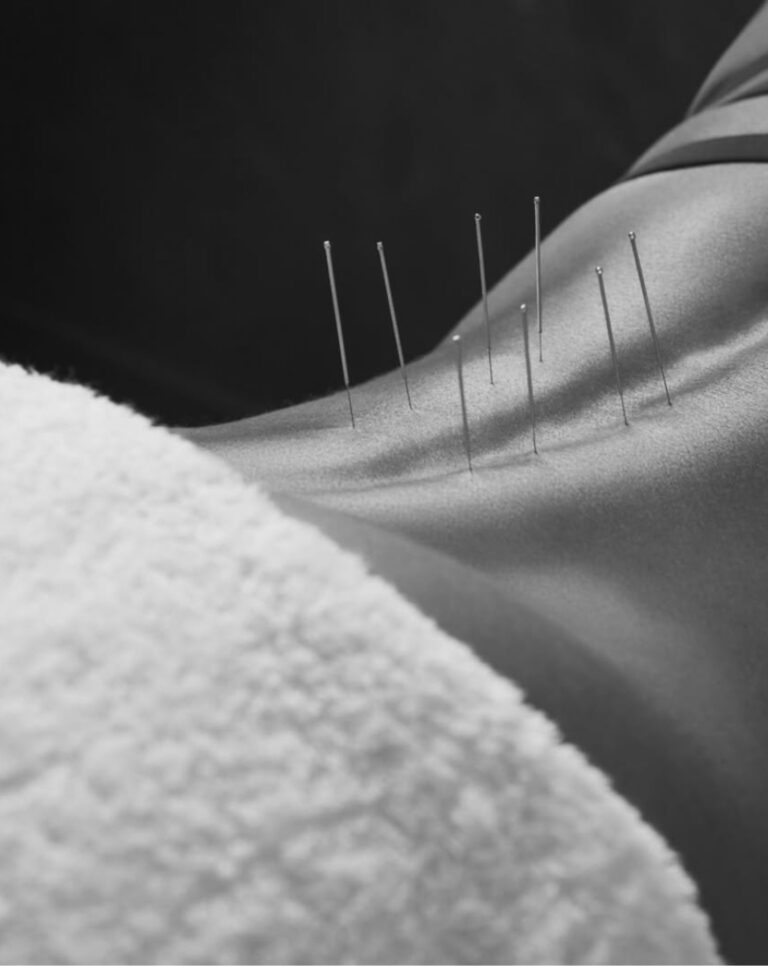
Acupuncture is widely used for joint pain and stiffness. Treatment aims to move qi and blood, clear the obstruction and strengthen the body so it’s less affected by the weather. Depending on your pattern, your practitioner may also recommend herbs, moxa or cupping. If a joint is suddenly painful, red, hot or very swollen, please see your doctor to rule out other causes.
Tired of letting the weather decide how your joints feel? At Yinova, our practitioners take a whole-body approach to pain, looking at what’s driving your symptoms and how to keep you moving comfortably all winter. Schedule an appointment online or email us to get started.